
About Konark Sun Temple
Sun Temple at Konark is a famous and gigantic chariot-shaped 13th-century temple dedicated to the Sun God, Surya. The Eastern Ganga Dynasty king Narasimhadeva I built this temple.
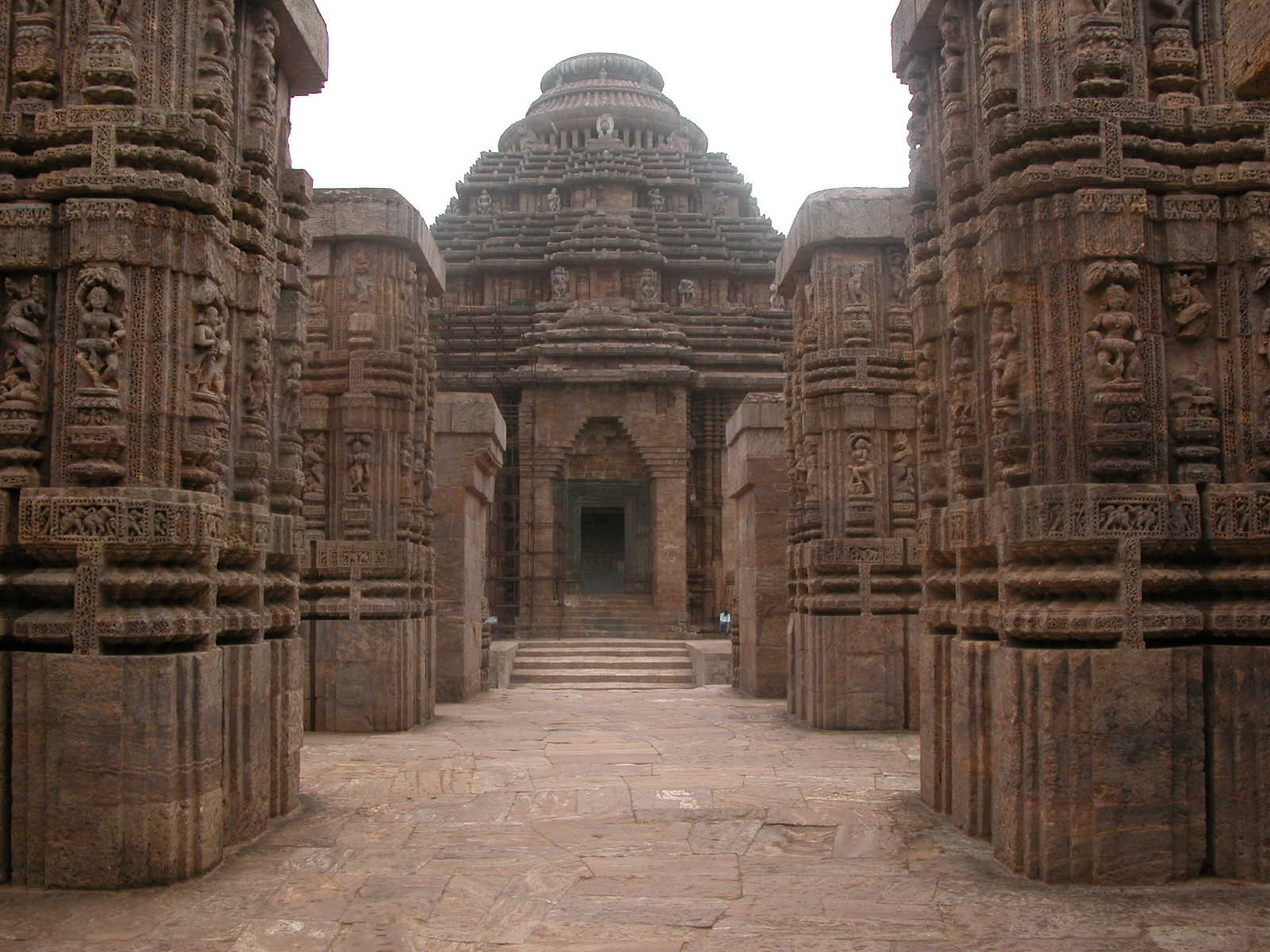 Konark Sun Temple. Photo Source: Creative Commons
Konark is a city on the Bay of Bengal Coast in the Puri district of Odisha state, India. This temple at Konark is also known as Black Pagoda, as the temple is built of black granite from ‘Khondalite’ rocks. (Jagannath temple at Puri is known as White Pagoda). This temple at Konark is a UNESCO World Heritage site, and much of the 13th-century temple is in a ruined state now. Konark Mandir, Surya temple, and Surya Mandir are other names for this temple.
Konark Temple Architecture
Konark Temple’s pillars, walls, and chariot wheels are all carved extensively, and the temple was featured as one of the “seven wonders of India” by the leading Indian News / TV Channel networks of NDTV and Times of India. Twelve pairs of the chariot wheels of the temple (24 wheels) are three meters in width and are pulled by seven pairs of horses (out of 14 horses, one is ruined now). This temple at Konark is an excellent example of Kalinga’ architecture. The architecture of the temple is in such a way that the first sunrise rays fall on the principal entrance of the Temple. It took 24 years and around 1,200 labourers to build this Temple.
 Another view of Sun Temple Konark. Photo Source: Creative Commons
Due to the heavy weight of the 70-meter tall structure and the nature of the loose soil on the coastal area, the main original sanctum fell in 1837. The thirty-meter-tall audience hall is still intact and is the principal structure now. The dance hall and dining hall also have survived the test of time.
The Hidden Science and Engineering Behind Konark’s Sun Temple
The Konark Sun Temple is celebrated as one of the most scientifically designed architectural wonders ever created. Built in the 13th century C.E., this extraordinary monument demonstrates an advanced understanding of astronomy, engineering, and geometry long before modern scientific tools existed.
How the Temple Functioned as a Giant Timekeeping Device
The Konark Surya Mandir was uniquely engineered to measure time with remarkable accuracy. Using multiple sun dials and moon dials, the temple could determine the precise minute of the day based on the position of shadows.
The most iconic feature is the massive stone sundial. Its eight major spokes divide the 24-hour cycle into eight three-hour segments. Between these are eight thinner spokes, positioned exactly at their midpoints, marking 90-minute intervals.
Around the rim are thirty carved beads between each major and minor spoke. These beads split the 90-minute interval into thirty equal parts of three minutes each. By reading where the sunlight falls—whether on the bead’s center or its edges—visitors could determine time to the exact minute.
Ingenious Design for Accurate Time Reading All Day
As the sun moves from east to west, a single sundial fixed on one wall would eventually fall into shadow. The architects anticipated this and carved an identical wheel on the western side of the temple. The eastern wheel works from morning until midday, while the western wheel measures time from noon until sunset.
Timekeeping After Sunset – The Mystery of the Moon Dials
After sunset, the sundials become unusable—but the architects had already accounted for this. The temple features a total of 24 intricately carved wheels that many researchers believe functioned as moon dials. These could potentially track time using moonlight during brighter lunar phases.
Local accounts say that until about a century ago, residents believed the wheels were merely ornamental. That changed when an old yogi was observed calculating time using the dials, revealing the hidden scientific purpose of these carvings.
Even today, researchers believe only a portion of the astronomical knowledge embedded in these wheels has been decoded. Many markings and symbols may carry meanings that have yet to be understood.
A Chariot of Stone Representing the Journey of Time
Konark Sun Temple was crafted in the form of a monumental stone chariot dedicated to Surya, the Sun God. Drawn by seven mighty horses and standing on twelve pairs of ornate wheels, the design symbolises motion, time, and celestial cycles. According to some interpretations, the seven horses represent the seven days of the week, further emphasising the temple’s connection to timekeeping.
When viewed as a whole, the structure reveals extraordinary collaboration between sculptors, engineers, and astronomers nearly 800 years ago. The precision, craftsmanship, and scientific insight embodied in the temple continue to astonish modern researchers.
Nearby Attractions to the Konark Sun Temple
Two ruined temples were also discovered close to the main temple. Mayadevi Temple, situated on the southwestern side of the main temple, is among them. This temple is dedicated to Mayadevi, the wife of the Sun God. This temple is believed to have been constructed in the 11th century. The existence of the older Mayadevi temple, along with other evidence, suggests that another Sun temple may have existed at the current site (which may have been damaged). The second ruined temple is close to the main Konark temple and is dedicated to an unknown ‘Vaishnava’ deity.
There is a museum at Konark, which houses some of the sculptures and other ruins of the temple.
Konark is also famous for the annual Indian classical dance festival called “Konark Dance Festival,” held in December.
How Do I Go to Konark Sun Temple?
Sun Temple at Konark is situated at a distance of 65 kilometers from Bhubaneswar, the capital of Ohidha state.